Rubix Stack Series 5.12 kWh Lithium Battery RS-51100
MPN No: RS-51100
Expected ship date Dec 04 - 11
In Stock
1,450.00
-17%
$1,199.00
You will not be able to undo this action.



U.S. Warehouse
Trusted by Thousands
Expert U.S. Support
RS-51100
MPN No: RS-51100
Expected ship date Dec 04 - 11
In Stock
1,450.00
-17%
$1,199.00
First Generation (Pre-9540) Model RS-51100
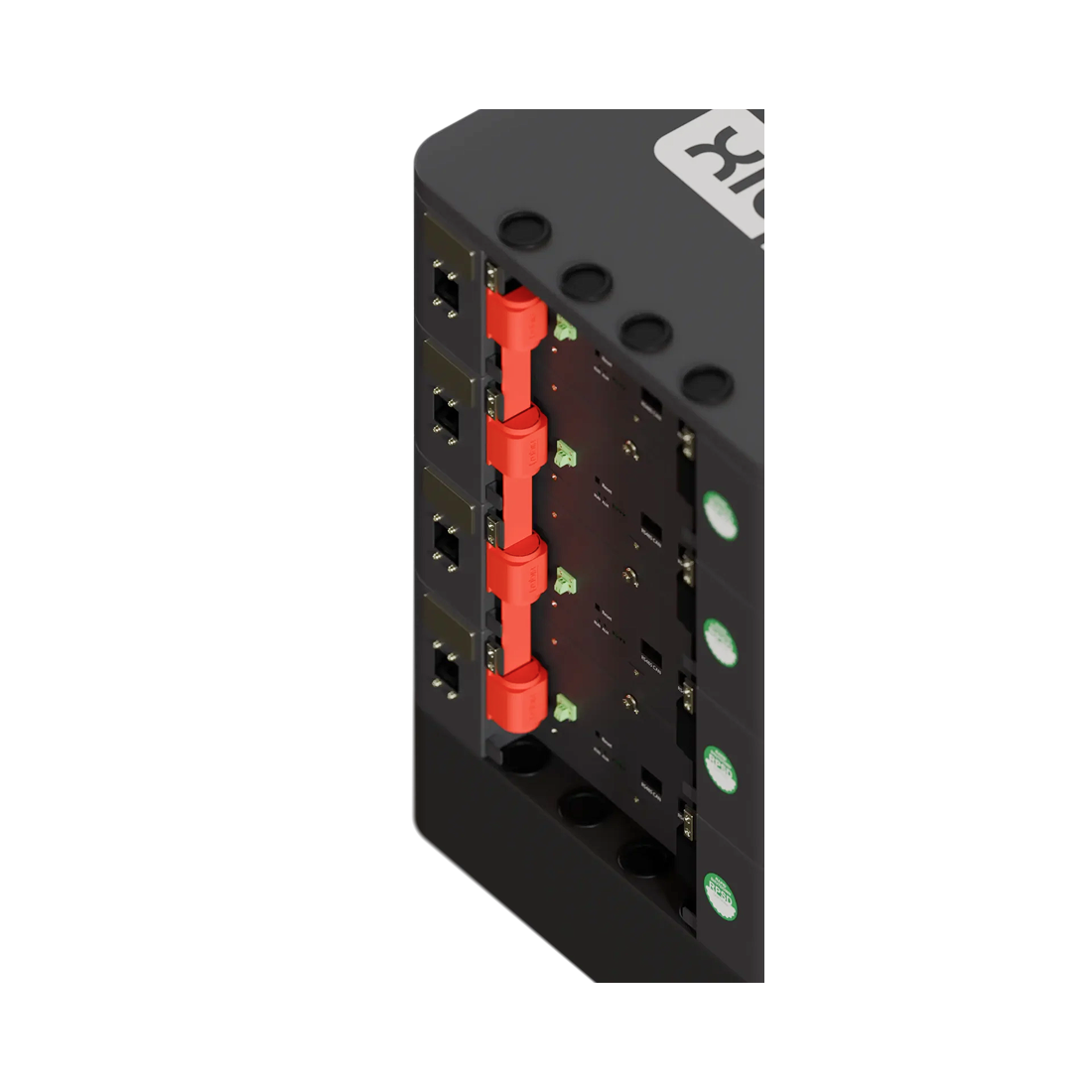
This offer includes one 5.12 kWh, 100 Ah Rubix battery for a compatible 48V solar or backup power system. Store daytime solar power for use after sunset, or pair the battery with a backup-capable inverter to keep selected circuits running during an outage.
Start with one module for a new indoor battery bank. If you need more runtime, two compatible modules give you 10.24 kWh of rated storage. A full stack of six gives you 30.72 kWh. The touchscreen shows how much charge remains and whether the battery is charging or supplying power.
Rubix identifies this as its earlier, pre-9540 Stack Series battery. If your permit requires a UL 9540-listed energy storage system, the listing must cover the specific battery and inverter together. Before ordering, give your installer or local permitting office both model numbers and ask whether the first-generation Rubix RS-51100 is accepted with your inverter.
If your refrigerator, freezer, router and lights draw an average of 300 watts combined, one fully charged module could run them for about 12 hours under the assumptions below. For a refrigerator or freezer, use its measured energy consumption over a full day to estimate runtime. Its brief startup draw matters separately when sizing the inverter.
| Average appliance load | Estimated runtime on one battery |
|---|---|
| 300 W | About 12 hours |
| 500 W | About 7.4 hours |
| 1,000 W | About 3.7 hours |
Estimates assume a full battery, a 20% reserve, 90% inverter efficiency and no solar input. That leaves about 3.69 kWh for appliances before inverter standby consumption. The inverter also draws power while appliances are idle, which can shorten overnight runtime.
| Specification | RS-51100 |
|---|---|
| Battery chemistry | Lithium iron phosphate (LiFePO₄) |
| Nominal voltage | 51.2 V (48V class) |
| Capacity per battery | 100 Ah / 5.12 kWh rated |
| Maximum stack size | 6 compatible batteries / 30.72 kWh rated |
| Maximum continuous discharge | 75 A / 3.84 kW DC at nominal voltage |
| Peak discharge | 200 A for 3 seconds / approximately 10.2 kW DC at nominal voltage |
| Maximum continuous charge | 70 A / 3.58 kW at nominal voltage |
| Recommended absorption voltage | 56.8 V |
| Float voltage | 54.4 V |
| Integrated breaker | 150 A |
| Installation environment | Indoor use, IP50 |
| Operating temperature | 32°F to 120°F |
| Dimensions per battery | 22.6 × 19.3 × 6.2 in. |
| Weight per battery | 108 lb |
You need a compatible inverter with backup capability and a system configured to supply the circuits you want to run. If you already have rooftop solar, check whether your inverter supports a 48V-class battery. For a new stack, confirm the base, lid, cables and other connection hardware on your quote.
No. One RS-51100 supplies up to 3.84 kW DC continuously at nominal voltage, and inverter losses reduce the power available to AC appliances. A compatible 5 kW inverter may serve smaller loads from one module. Check the inverter manufacturer’s minimum battery-bank size before choosing how many modules to buy.
For a well pump or sump pump, also check the motor’s startup demand. The battery’s 200 A peak rating lasts three seconds, and the inverter needs to handle that surge too.
If your solar array has 1 kW available for charging after household loads are covered, replacing 4 kWh takes about four hours before charging losses and the final charging stage. With 500 W available, the same refill takes about eight hours. Use the solar power left over during the day when estimating recharge time.
The RS-51100 is an indoor battery rated for 32°F to 120°F. Choose a location that stays within that range, including overnight in winter. Each module weighs 108 lb. When measuring your space, allow room for the base, lid and required installation clearances as well as the battery itself.
Check the model number and generation on your battery label. This offer is for the first-generation RS-51100. If your existing battery has a different model number, call us before ordering so we can help check compatibility. A photo of the label is helpful.
You can view state of charge, pack voltage, individual cell voltages, charge and discharge current, and recorded faults directly on the battery. The battery management system monitors voltage, current and temperature. Each module also has pressure-vented cells and an integrated 150 A breaker.
The listed first-generation ratings are 3,000 cycles at 100% depth of discharge, 4,500 cycles at 80%, and 7,000 cycles at 50%. Keeping a larger reserve leaves less energy available per cycle and corresponds to a higher rated cycle count.
The listed design life is 14+ years. Ask us for the first-generation RS-51100 warranty to review its coverage period, capacity terms and claims process before you order.
Call US Solar Supplier at 1-800-230-7004 with your inverter model, the appliances you want to run and how many hours of backup you need. We can help you compare battery counts and check which equipment belongs on your quote.
Secure today's pricing and confirm your shipment.
Your equipment is reserved once checkout is complete.


Mon – Fri: 8:00 AM – 8:00 PM EST
Saturday: 9:00 AM – 1:00 PM EST